
Home / Home renovation in Toronto
Home Renovation Toronto: Owner-Led Since 1997
First Place Homes has worked as a home renovation contractor in Toronto since 1997. More than 100 houses in 29 years, most of them century homes in the east end and the west end, owned by people who plan to stay in them.
Harvey Minuk quotes the job and runs it and he checks the work before it closes. You get his number at the first meeting and you keep it after the last invoice.
We are a City of Toronto licensed renovation contractor. Harvey is also a certified Passive House Tradesperson, which is formal training in insulation, air sealing and ventilation. Most general contractors in Toronto have not done it. In a 1920s semi it shows up as a room that holds its heat in February, a quieter house and a gas bill that stops climbing. We measure that part of the work instead of guessing at it.
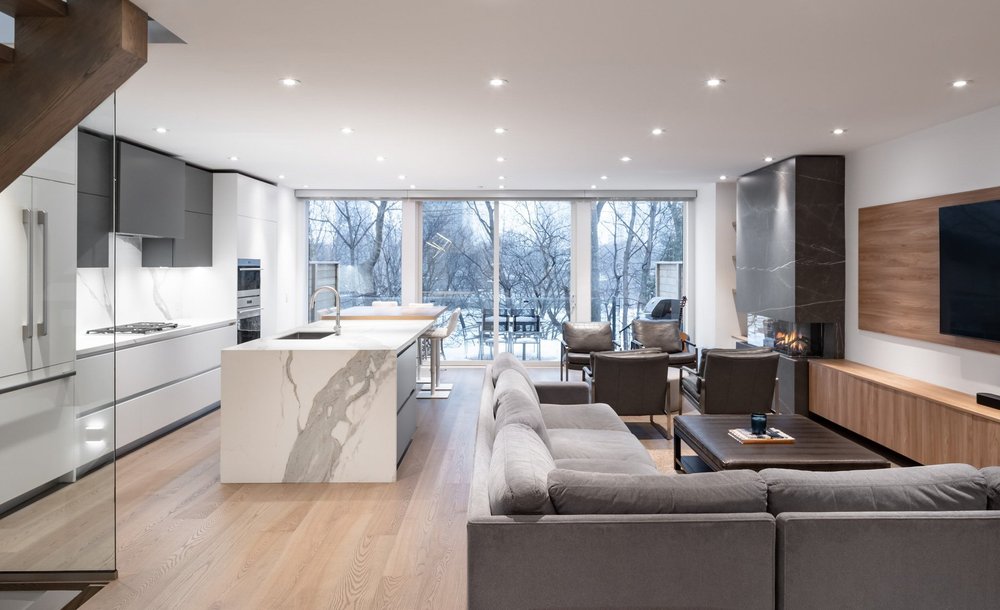
First Place Homes is an owner-led home renovation contractor in Toronto, run by Harvey Minuk since 1997. Kitchens, bathrooms, basements, additions and condos, mostly in century homes in the east and west ends. One contract, one crew, Harvey on site. Design in 2 to 4 weeks, build in 4 weeks to 4 months, permits handled, one-year workmanship warranty.
or call (416) 489-4083
Home renovation in Toronto: key facts
| Who does the work | One contract and one crew. Harvey Minuk quotes the job, runs the job and checks it before it closes. |
| What we renovate | Kitchens, bathrooms, basements and second suites, rear and second storey additions, condos and townhomes. Most of it in century homes. |
| Timeline | Free consultation, then design and budget in 2 to 4 weeks, then a build of 4 weeks to 4 months depending on scope. City permit review is added on top. |
| Permits | City of Toronto building permit for structural changes, additions, new or relocated plumbing, underpinning and second suites. We prepare the application and meet the inspectors. |
| Pricing | No rate card. Harvey walks the house, then you get a written number that itemizes labour, materials and permits. |
| Warranty | One-year workmanship warranty. Manufacturer warranties on materials and appliances are passed to you with the paperwork. |
| Where | The Beaches, Riverdale, the Danforth, Bloor West Village, High Park, East York, Etobicoke and Scarborough. |
What we renovate
Kitchens
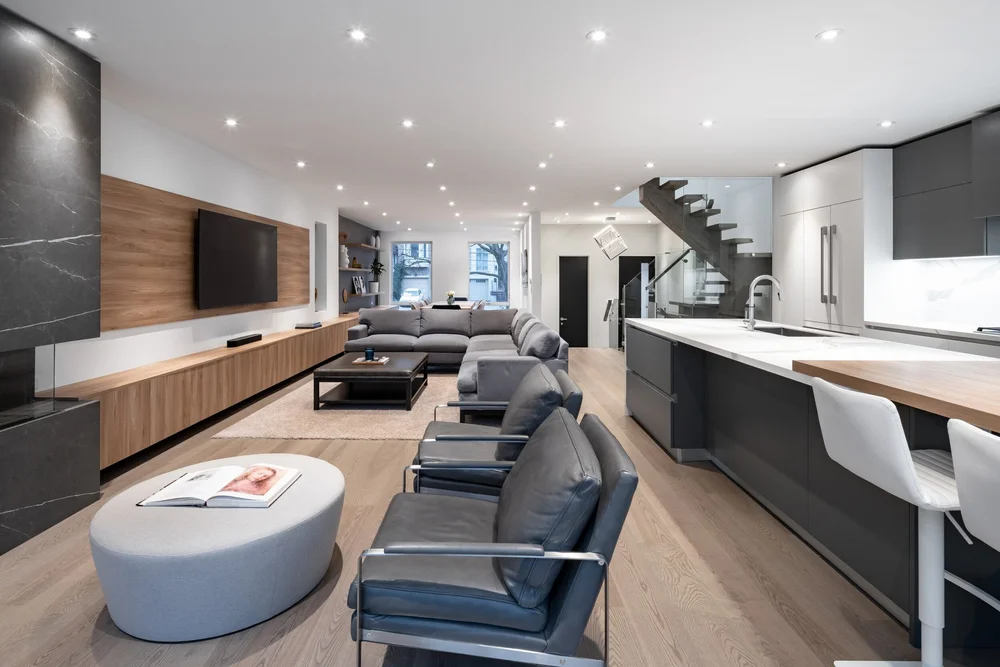
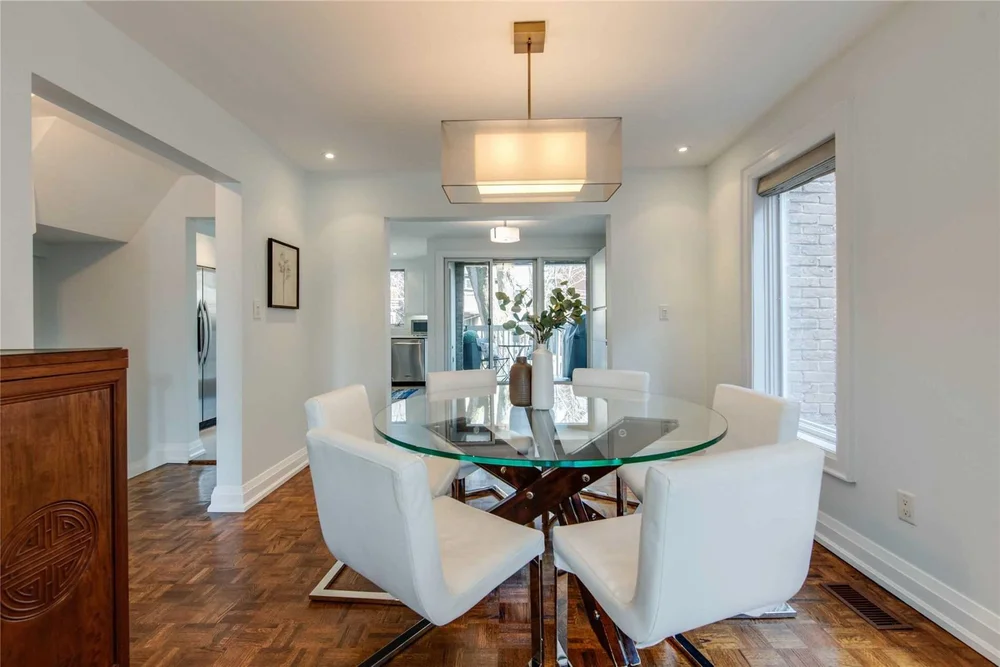
Most Toronto kitchens we build are full gut jobs in a semi or a detached century home. The wall between the kitchen and the dining room comes out, a beam goes in and the mechanical hiding in that wall gets rerouted. Cabinetry, appliances and structural work move the number more than anything else. You see a 3D rendering before anything is ordered. More on kitchen renovation in Toronto.
Bathrooms
Second-floor bathrooms in old Toronto houses are small, poorly vented and often sitting on undersized joists. We rebuild them with waterproofing behind the tile, a fan ducted outside and drain runs sized for the joists we find when the floor opens. More on bathroom renovation in Toronto.
Basements
We work a basement in order. Water and drainage get solved before height and height before finishes. That covers waterproofing, underpinning or benching where the ceiling is too low, family rooms and legal second suites. More on basement renovation in Toronto.
Home additions
Rear additions and second storeys add the square footage a century home cannot rearrange its way into. These jobs start with zoning and drawings, because what you are allowed to build sets the design. More on home additions.
Condos and townhomes
Condo work runs on the building's terms: property manager approvals, elevator bookings, restricted work hours and noise windows. We handle that paperwork and schedule around it. More on condo renovation in Toronto.
Where we work in Toronto
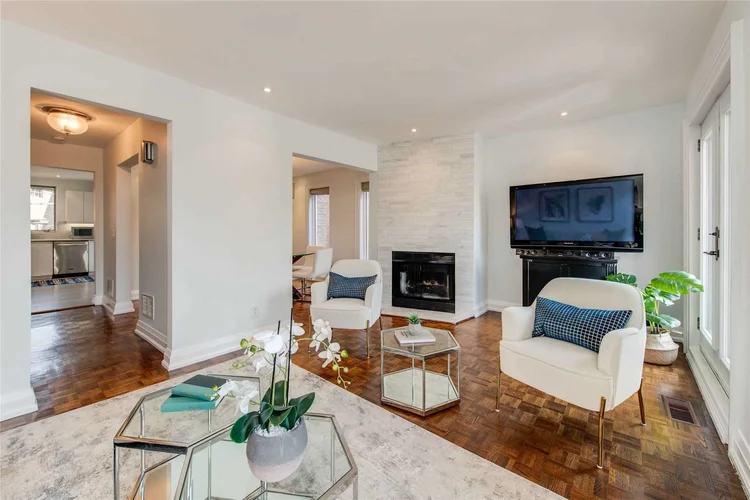
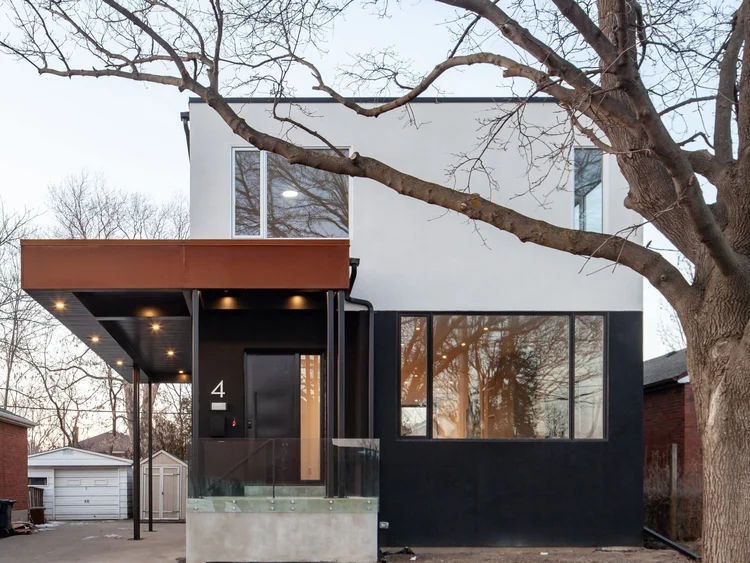
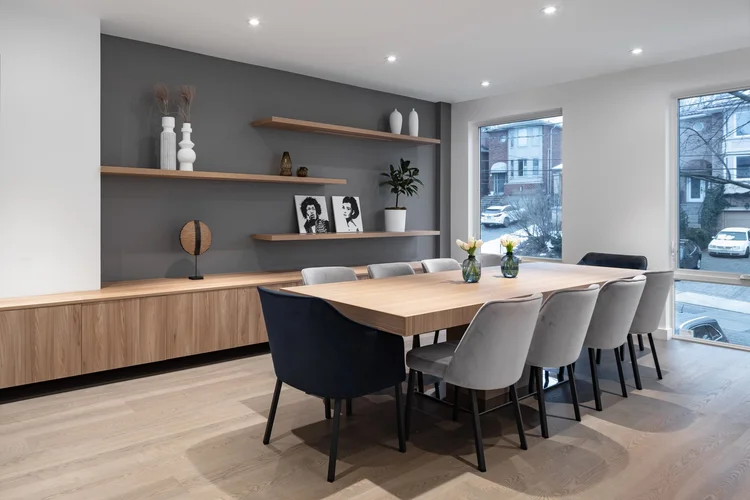
Our work sits in two bands of the city. In the east: the Beaches, Riverdale, the Danforth and East York. In the west: Bloor West Village, High Park, Swansea and Runnymede. We also work in Etobicoke and Scarborough.
These are century home neighbourhoods and the houses repeat. Knowing what is behind the plaster on a given street is most of what makes a quote accurate.
How we work
| 1 | Free consultation | Phone or video to start, then a site visit. No charge and no obligation. |
| 2 | Design and budget, 2 to 4 weeks | Drawings, a written scope with allowances and exclusions spelled out and 3D renderings for kitchens and bathrooms. |
| 3 | Build, 4 weeks to 4 months | All labour and materials supplied. Permits coordinated. Harvey on site. |
| 4 | Final check | Harvey walks the job with you and closes the list. You get a 1-year workmanship warranty and the manufacturer warranties are passed to you with the paperwork. |
Four questions to ask every general contractor in Toronto, including us
Building contractors in Toronto range from one-truck operations to firms running twenty crews and the websites all look the same. Interviewing more than one is normal and we recommend it. These four questions sort home renovation companies faster than comparing bottom-line numbers. Our answers are below each.
Who runs my job day to day and how many other jobs are open at the same time?
Harvey and a small number. That is why our calendar books out. If you need a large project started next month, a bigger building contractor with a full-time site supervisor may suit you better and we will say so at the first meeting.
Are you licensed and insured and will you show me the certificates before I sign?
First Place Homes is a City of Toronto licensed renovation contractor and the licence number is available on request. Ask any contractor for theirs. Ask for a current liability insurance certificate and a WSIB clearance certificate before work starts. A contractor who has them sends them the same day.
What is excluded from this price and what happens when something turns up behind the wall?
Read the exclusions before you read the total. In a century home the usual finds are knob-and-tube wiring, lath and plaster over failed strapping, undersized joists and clay drain tile that has silted up. We write allowances and exclusions into the quote and anything discovered gets priced and approved by you before we build it.
Who comes back if something moves in the first year?
Harvey. Hairline cracks in new plaster and doors that need adjusting through the first heating season are normal in an old house. The 1-year workmanship warranty covers our labour and we come back for the small things.
Century homes are our home field
Most of the houses we renovate are one of these:
- Bay-and-gable semis, roughly 1880s to 1910s. Narrow, shared party wall, shallow basement.
- Edwardian detached, roughly 1910s to 1930s. Solid masonry, generous footprint, chopped-up floor plan.
- Wartime bungalows. Small footprint, low basement, straightforward to add to.
What is inside them repeats too: knob-and-tube wiring, lath and plaster, undersized joists, basements around 6 feet, clay drain tile and brick walls with no insulation in them.
A contractor who measures does a few things differently. Joist depth and span get checked before anyone promises a bathroom where a closet used to be. Basement headroom gets measured from the underside of the joists to the slab before underpinning is discussed. Foundation walls get looked at after a heavy rain, when the water shows itself. Air sealing goes in ahead of insulation, because insulating over a leaky assembly moves the dew point into your wall. None of that is expensive to do. It is expensive to skip.
Permits and design-build
We work design-build. One contract covers the drawings and the construction and one person is answerable for both. In practice we coordinate:
Building permits go through the City of Toronto district office covering your address. Most of the houses we work on fall under Toronto and East York. Etobicoke work goes through Etobicoke York. Permit review takes time and that time is in the schedule you get at the start.
What clients say
"Harvey and his team at First Place did some amazing job. They were professional, on-budget, and most importantly on time!"
Tama S."In both instances, it was a pleasure to work with him. His professionalism and proactive attitude helped to calm our nerves throughout the experience."
Greig G.Recent work is in the photo gallery.
Frequently asked questions
How much does a home renovation cost in Toronto?
It depends on the room, the age of the house and how much structure is involved. We price from a walkthrough rather than a rate card, because the same set of drawings costs different amounts in a 1920s semi and a 1980s side-split. Structural work, relocated plumbing and anything that opens a wall in a century home are what move a number most. Book a free consultation and you will get a real one in writing, itemized for labour, materials and permits.
How long does a home renovation take in Toronto?
Design and budgeting take 2 to 4 weeks. Construction runs 4 weeks to 4 months depending on scope. A single bathroom sits at the short end. A whole-home renovation with structural work sits at the long end. City permit review time is separate and gets added to the schedule.
Do I need a permit to renovate a house in Toronto?
You need a City of Toronto building permit for structural changes, additions, new or relocated plumbing, basement underpinning and creating a second suite. Cosmetic work such as cabinets, paint and flooring usually does not require one. First Place Homes prepares and submits the permit application and meets the inspectors on site.
Are you a licensed general contractor in Toronto?
Yes. First Place Homes is a City of Toronto licensed renovation contractor and has operated in Toronto since 1997. Owner Harvey Minuk is a certified Passive House Tradesperson, which is building science training in insulation, air sealing and ventilation. The licence number is available on request.
Do you renovate century homes with knob-and-tube wiring and lath and plaster?
Yes. Century homes are the majority of our work. Knob-and-tube wiring, lath and plaster, undersized joists and shallow basements come up on nearly every job in the east and west ends and we price the work knowing we will find them.
What areas of Toronto does First Place Homes serve?
First Place Homes works across east end and west end Toronto, including the Beaches, Riverdale, the Danforth, East York, Bloor West Village, High Park, Swansea and Runnymede. We also work in Etobicoke and Scarborough.
Talk to us
Get a free consultation. Harvey will look at the house and tell you what it needs, including the parts we would tell you to skip.